
Listening is not a lesser form of reading. It can be a practical alternative when screen time, small type or a long day makes visual reading uncomfortable.
There is a point where persistence stops helping
You reach the end of a line and realise none of it stayed with you. You read the same paragraph again. The article is interesting, but the act of looking has become the hardest part.
That experience can happen for many reasons: a long day of screen work, glare, dry eyes, low vision, illness, tiredness or simply the density of the page. A reading tool does not need to identify the cause before offering another route.
Listening keeps the content moving
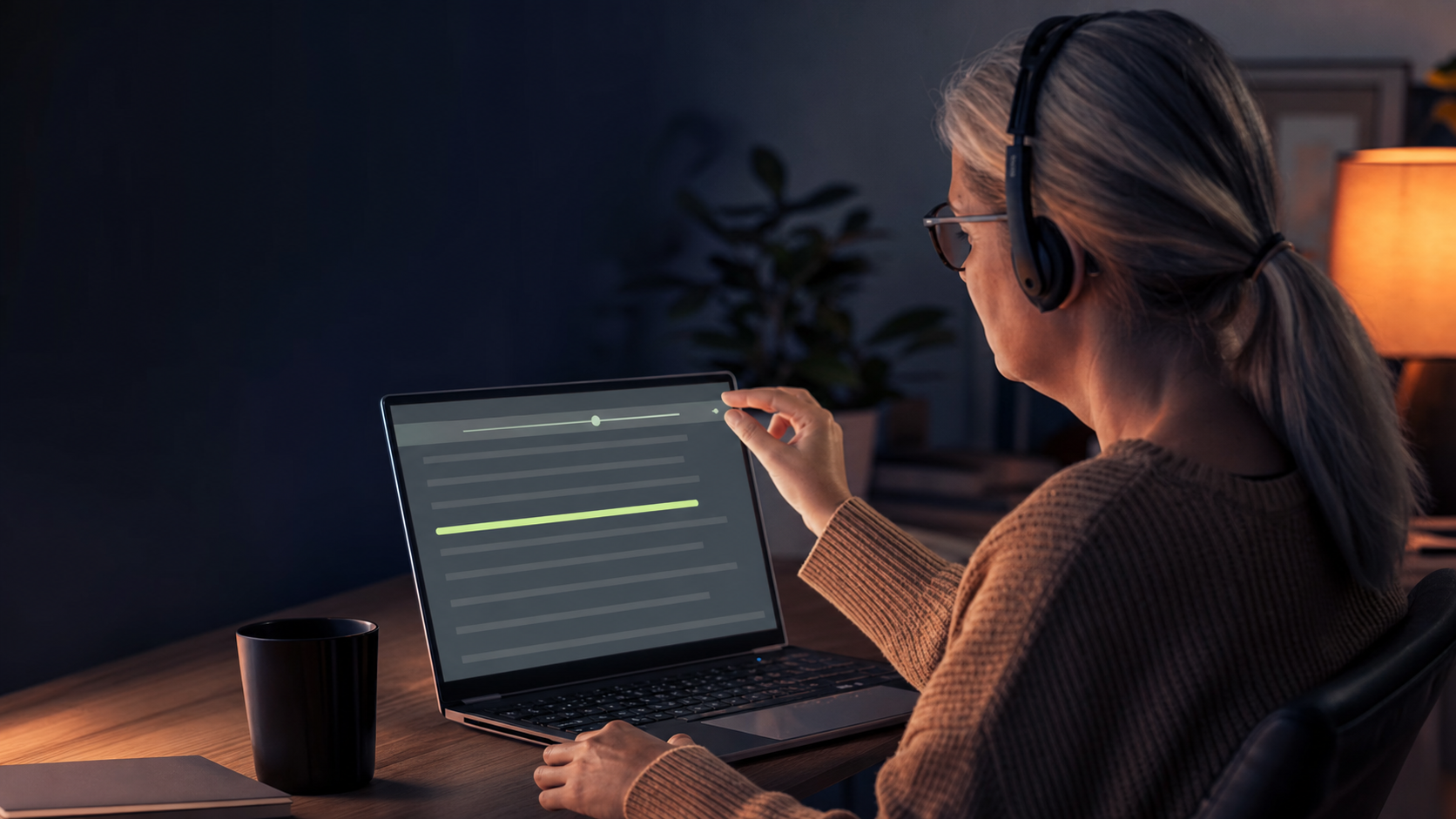
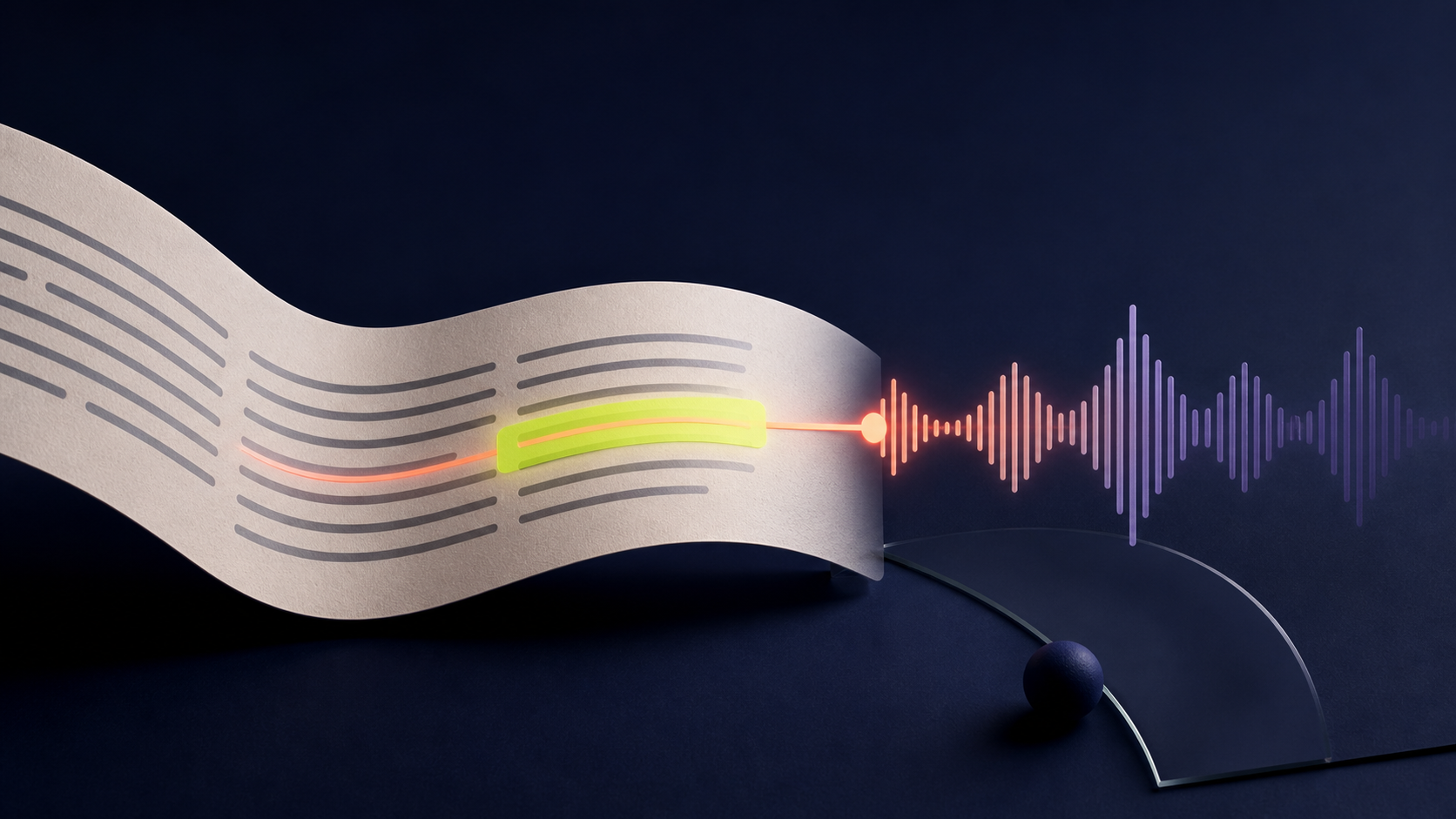
Text-to-speech moves the decoding work from the eyes to the ears. You can close your eyes for a moment, look away from the screen or change posture while the article continues.
This is not about racing to the end. Natural phrasing and an adjustable pace matter because strained, mechanical speech creates a different kind of fatigue. A comfortable voice should make the text easier to stay with.
Sometimes the most accessible reading mode is the one that lets you stop looking without having to stop learning.
Keep the page available for checking
Audio is excellent for flow, but some details are easier to verify visually. Names, figures, links and unfamiliar terms often deserve a glance. On-page highlighting lets you move between listening and looking without searching for the sentence again.
If the movement itself feels tiring, turn off automatic scrolling. The narration can continue without asking the page to follow every word.
Create a lower-effort listening setup
- Reduce the screen brightness until the page is comfortable rather than dramatic.
- Choose a voice you can understand without concentrating on its pronunciation.
- Slow down for unfamiliar material and speed up for sections you already know.
- Pause at meaningful breaks instead of waiting until attention is exhausted.
- Use speakers if headphones become uncomfortable.
Know when a tool is not the answer
Persistent eye pain, sudden vision changes or other concerning symptoms deserve professional medical advice. A read-aloud extension is not a substitute for eye care. Its role is narrower: make ordinary digital reading more flexible.
That flexibility can still be meaningful. The article remains yours to read, but “read” no longer has to mean staring at every line.